

The Macroeconomics of Credit and Asset Bubbles: Booms, Busts, and Policy Responses
Exploring bubbles: Economic impact, business cycles, and policy responses through modeling.


'%3e%3cpath%20d='M9.5%200.414062C4.52944%200.414062%200.5%204.4435%200.5%209.41406C0.5%2014.3846%204.52944%2018.4141%209.5%2018.4141C14.4706%2018.4141%2018.5%2014.3846%2018.5%209.41406C18.5%204.4435%2014.4706%200.414062%209.5%200.414062ZM9.5%2017.1283C5.23952%2017.1283%201.78571%2013.6745%201.78571%209.41406C1.78571%205.15358%205.23952%201.69978%209.5%201.69978C13.7605%201.69978%2017.2143%205.15358%2017.2143%209.41406C17.2143%2013.6745%2013.7605%2017.1283%209.5%2017.1283Z'%20fill='%2300859B'/%3e%3cpath%20d='M9.68398%206.10774C10.1904%206.10774%2010.6024%205.69575%2010.6024%205.18935C10.6024%204.68295%2010.1904%204.271%209.68398%204.271C9.17758%204.271%208.76562%204.68299%208.76562%205.18935C8.76562%205.69572%209.17761%206.10774%209.68398%206.10774Z'%20fill='%2300859B'/%3e%3cpath%20d='M11.6967%2012.6017L10.5029%2012.6006L10.5031%207.69636L10.5022%207.66067C10.4836%207.31803%2010.2%207.0459%209.85283%207.0459H8.36644L8.33076%207.04686C7.9882%207.06539%207.71614%207.34909%207.71614%207.69635L7.7171%207.73204C7.73562%208.07468%208.01926%208.34681%208.36644%208.34681L9.20235%208.34668V12.5995L7.9789%2012.6006C7.63579%2012.6191%207.36328%2012.9032%207.36328%2013.251C7.36328%2013.6107%207.6549%2013.9023%208.01464%2013.9023L11.6967%2013.9014C12.5102%2013.862%2012.5102%2012.641%2011.6967%2012.6017Z'%20fill='%2300859B'/%3e%3c/g%3e%3cdefs%3e%3cclipPath%20id='clip0_4486_4677'%3e%3crect%20width='18'%20height='18'%20fill='white'%20transform='translate(0.5%200.414062)'/%3e%3c/clipPath%3e%3c/defs%3e%3c/svg%3e)

 Overview
 Learning outcomes
 Key Topics
 Schedule
 Who is this Course for?
 Admissions
 Fees
Fees FAQ
FAQ
'%3e%3cpath%20opacity='0.9'%20d='M9.96879%206.49998C9.96764%206.63235%209.91511%206.7591%209.82229%206.85348L4.82229%2011.8535C4.72799%2011.9446%204.60169%2011.995%204.47059%2011.9938C4.33949%2011.9927%204.21409%2011.9401%204.12138%2011.8474C4.02868%2011.7547%203.97609%2011.6293%203.97495%2011.4982C3.97381%2011.3671%204.02421%2011.2408%204.11529%2011.1465L8.76179%206.49998L4.11529%201.85348C4.06754%201.80736%204.02944%201.75218%204.00324%201.69118C3.97704%201.63018%203.96324%201.56457%203.96267%201.49818C3.96209%201.43179%203.97474%201.36595%203.99988%201.3045C4.02502%201.24306%204.06215%201.18723%204.10909%201.14028C4.15604%201.09334%204.21187%201.05621%204.27331%201.03107C4.33476%201.00593%204.4006%200.993278%204.46699%200.993855C4.53338%200.994432%204.59899%201.00823%204.65999%201.03443C4.72099%201.06063%204.77617%201.09872%204.82229%201.14648L9.82229%206.14648C9.91511%206.24086%209.96764%206.36761%209.96879%206.49998Z'%20fill='black'/%3e%3c/g%3e%3cdefs%3e%3cclipPath%20id='clip0_4500_3924'%3e%3crect%20width='12'%20height='12'%20fill='white'%20transform='translate(0.96875%2012.5)%20rotate(-90)'/%3e%3c/clipPath%3e%3c/defs%3e%3c/svg%3e) Summer School CREI - MacroeconomicsThe Macroeconomics of Credit and Asset Bubbles: Booms, Busts, and Policy Responses
Summer School CREI - MacroeconomicsThe Macroeconomics of Credit and Asset Bubbles: Booms, Busts, and Policy ResponsesCourse overview
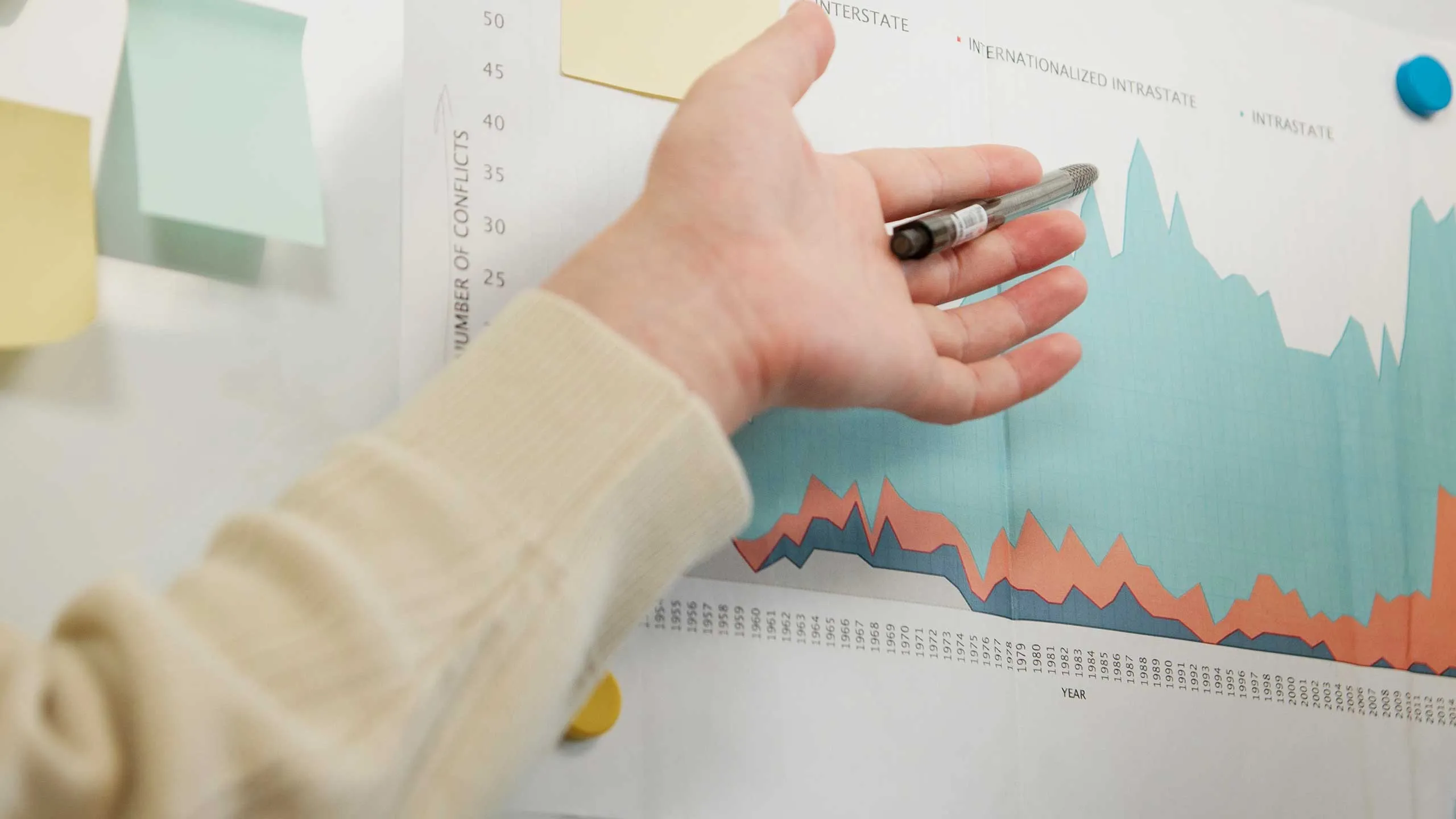
What are bubbles? What are their effects on the economy? How should policymakers deal with them? In this course, we address these questions from a macroeconomic perspective. We first review the stylized evidence on credit and asset bubbles. We then develop a workhorse model to think about bubbles and their macroeconomic effects. In particular, we focus on the effects of credit and asset bubbles on business cycle models. We conclude by using the model to shed light two key debates regarding bubbles:
(i) How should monetary policy respond to asset bubbles?
(ii) What roles do bubbles play in driving credit booms and busts?
This course is intended for students, researchers and practitioners who want to become familiar with the state of knowledge on the origins and macroeconomic effects of bubbles.
Faculty
Who is this course for?
This Asset-focused program is intended for:
- Students, researchers, and practitioners aiming to understand the origins and macroeconomic impacts of bubbles
Learning outcomes
By the end of the course, participants will be able to:
- Define and identify credit and asset bubbles and their characteristics and analyze their economic impact
- Assess the macroeconomic effects of bubbles, particularly on business cycles
- Build and utilize a workhorse model to evaluate bubbles’ impact on the economy
- Understand how monetary policy should respond to asset bubbles
- Understand the role of bubbles in driving credit booms and busts
- Apply learned concepts to real-world scenarios and current economic debates
Key topics for The Macroeconomics of Credit and Asset Bubbles course
What will you learn? Below is a brief outline of the topics covered in this course.
Course Outline


- A review of the empirical evidence on bubbles
- Introduction to the theory of rational bubbles
- Credit and asset bubbles in business cycle models
- Policy design (I): bubbles and monetary policy
- Policy design (II): bubble, credit booms, and information depletion
List of References
The following list may be useful when preparing for the course.
Articles and Books
- Asriyan, V., L. Fornaro, A. Martin, and J. Ventura, Monetary Policy for a Bubbly World, Review of Economic Studies, forthcoming.
- Asriyan, V., L. Laeven, and A. Martin, Collateral Booms and Information Depletion, Review of Economic Studies, forthcoming.
- Abel, A., N. Mankiw, L. Summers and R. Zeckhauser, Assessing Dynamic Efficiency: Theory and Evidence, Review of Economic Studies, 1989.
- Carvalho, V., A. Martin and J. Ventura, Bubbly Business Cycles, American Economic Review, 2012.
- Gali, J., Monetary Policy and Bubbles in a New Keynesian Model with Overlapping Generations, American Economic Journal: Macroeconomics.
- Guerrón-Quintana, P., Hirano, T. and R. Jinnai, Recurrent Bubbles and Growth, Boston University mimeo, 2021.
- Hiraona, T., M. Inabab, and N. Yanagawa, Asset Bubbles and Bailouts, Journal of Monetary Economics, 2015
- Leroy, S., Rational Exuberance, Journal of Economic Literature, 2004.
- Martin, A. and J. Ventura, Theoretical Notes on Bubbles and the Current Crisis, IMF Economic Review, 2011.
- Martin, A. and J. Ventura, Economic Growth with Bubbles, American Economic Review, 2012.
- Martin, A. and J. Ventura, Managing Credit Bubbles, Journal of the European Economic Association, 2016.
- Martin, A. and J. Ventura, The Macroeconomics of Rational Bubbles: A User’s Guide, Annual Review of Economics, 2018.
- Tirole, J., Asset Bubbles and Overlapping Generations, Econometrica, 1985.
Why join our Summer School?
All BSE Summer courses are taught to the same high standard as our Master’s programs. Join us to:
Network with like-minded peers
Study in vibrant Barcelona
Learn from world-renowned faculty
Admissions and Requirements
Applicants must ensure they meet course requirements or verify eligibility with Admissions Counselors.
Requirements
Summer School applicants normally demonstrate one or more of the following:
- A strong background in Economics or a field closely related to the course topic (Statistics, Law, etc.)
- Postgraduate degree or current Master’s/PhD studies related to the course topic
- Relevant professional experience
Requirements for Macroeconomics of Credit and Asset Bubbles course
- Basic modeling and econometric tools are recommended to benefit from the course materials fully
- Basic knowledge of dynamic models is recommended
Schedule
Here is your schedule for this edition of CREI Macroeconomics Summer School, Macroeconomics of Credit and Asset Bubbles course.
Credits Transfers (ECTS)
- ECTS are not available for this course
Certificate of Attendance
Participants who attend more than 80% of the course will receive a Certificate of Attendance, free of charge.
* Reduced Fee applies for PhD or Master’s students, Alumni of BSE Master’s programs, and participants who are unemployed.
FAQ
Need more information? Here are some commonly asked questions by participants. Any further queries, please contact our Admissions Team.
Is accommodation included in the course fee?
Accommodation is not included in the course fee. Participants are responsible for finding accommodation.
Are the sessions recorded?
Sessions will NOT be recorded; however, the materials provided by the professor will be available for a month after the course has finished.
How much does each Summer School course cost?
Fees for each course may vary. Please consult each course page for accurate information.
Are there any discounts available?
Yes, BSE offers a variety of discounts on its Summer School courses. See more information about available discounts or request a personalized discount quote by email.
Can I take more than one course?
Yes! you can combine any of the Summer School courses (schedule permitting). See the full course calendar.
Are there any evening activities during the course?
A social dinner will take place during the week for all participants, and it is free to attend.
Mix and match your summer courses!
Remember that you can combine this program with courses in any of the other BSE Summer School programs (schedule permitting). Maximise your learning this summer and take advantage of our multiple-course discount.








Economics. All rights reserved.


